


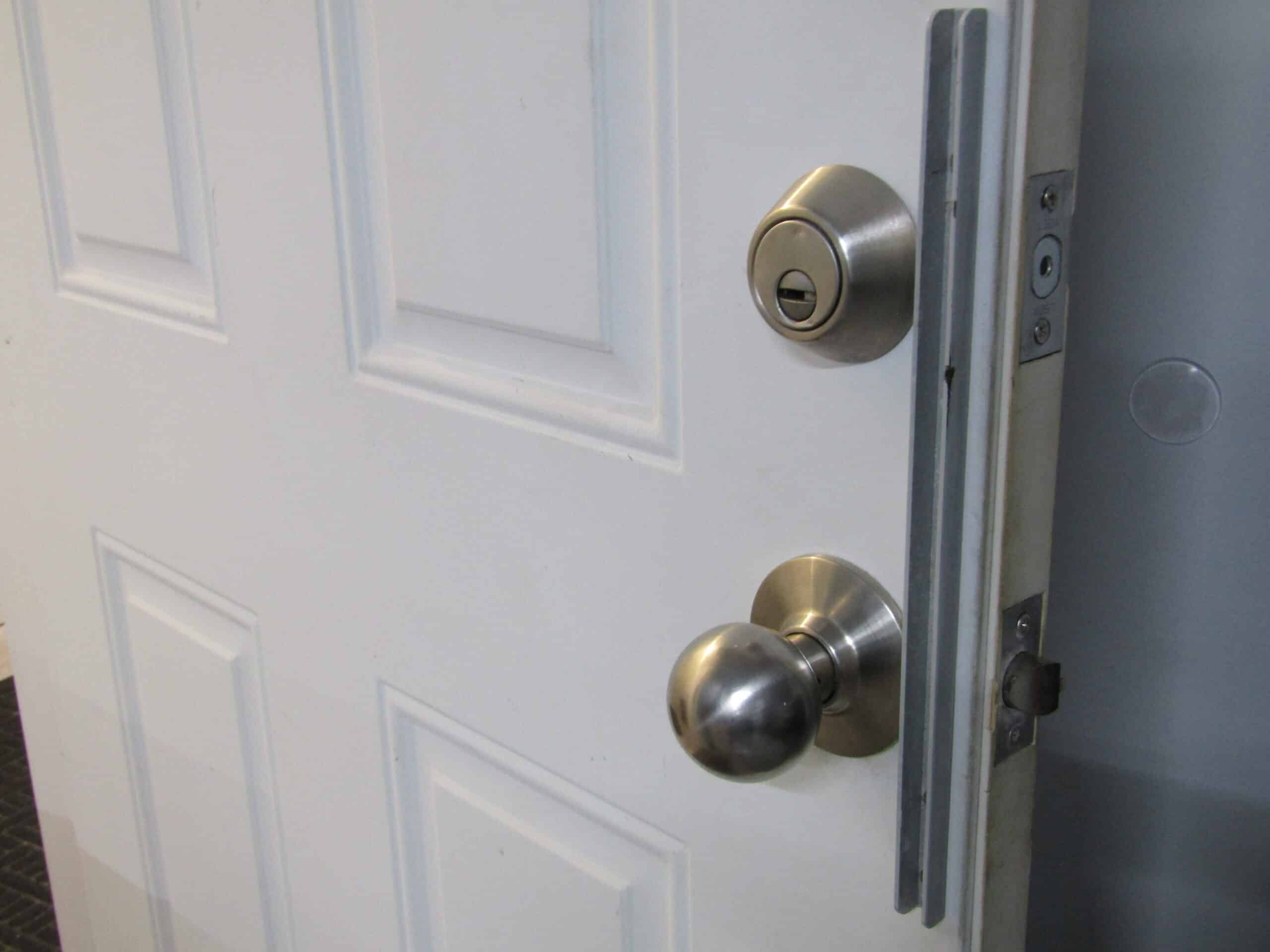
What Is a Lock Cylinder and Why Does It Wear Out?
The lock cylinder is the part of your lock that accepts the key. Inside, a series of spring-loaded pins align with the cuts on your key to allow the lock to turn. Over time, those pins, springs, and the inner sleeve all experience friction. In Chicago, seasonal temperature swings and humidity changes accelerate this process. A residential front door opened multiple times daily puts real cumulative stress on the cylinder. Commercial properties with high foot traffic see this wear even faster.
Key Feels Stiff or Hard to Turn
One of the earliest lock cylinder wear signs in Chicago, IL is a key that requires noticeably more force to turn than it used to. If you find yourself pushing, jiggling, or applying extra pressure, the internal pins or the cylinder housing may be worn or misaligned. Worn pins lose their ability to spring back cleanly, which creates drag as the key moves through the cylinder. In colder months, this symptom can be mistaken for a weather-related issue, but if it persists through warmer seasons, the cylinder is the more likely culprit. We can inspect the cylinder and determine whether lubrication, rekeying, or full replacement is the right call.
The Key Turns but the Lock Does Not Engage Fully
A worn cylinder can reach a point where the key turns freely but the bolt or latch does not move as it should. This happens when the cam or tailpiece at the back of the cylinder becomes too worn to transfer rotational force properly. Common signs at this stage include:
- A clicking sound when turning the key
- The cylinder spinning without resistance
- The door appearing locked while offering little actual resistance
- The bolt failing to extend or retract fully
This is a more advanced stage of wear. Replacing the cylinder at this point is typically the most reliable fix, and we can match the new cylinder to your existing hardware or recommend an upgrade.
Key Inserts or Removes Loosely, or Gets Stuck
A cylinder in good condition holds the key snugly and releases it cleanly. When a cylinder is wearing out, you may notice the key feels loose inside the lock, rattles slightly, or requires an odd angle to remove. A worn cylinder may also grip the key too tightly, making removal difficult or causing the key to break inside the lock. Chicago homeowners who have experienced a broken key stuck in a lock often trace the root cause back to a cylinder showing these subtle signs for some time. Addressing the cylinder before a key breaks saves both the cost and inconvenience of an extraction.
Visible Wear, Wobble, or Damage Around the Cylinder
Physical inspection can reveal wear that is not yet causing operational problems. Watch for these warning signs:
- The cylinder wobbles when you insert the key
- A retaining clip has loosened or come free
- Visible scoring or scratches around the keyway
- Signs of forced entry or tampering around the cylinder face
In commercial settings, high-traffic cylinders on storefront doors or office entries can show this kind of wear within a few years of installation, particularly with standard-grade hardware. Upgrading to a higher-security cylinder in these applications is worth considering. We have helped property managers and business owners across Chicago identify cylinders that looked functional but were no longer providing adequate security.
When to Rekey vs. When to Replace the Cylinder
Not every lock cylinder problem calls for full replacement. If the cylinder is structurally sound but you are concerned about key control, professional lock rekeying changes the internal pins so old keys no longer work without touching the cylinder housing. Rekeying is a cost-effective option after a move, a staff change, or a lost key situation. However, if the cylinder shows physical wear or mechanical failure, rekeying will not resolve the underlying issue. In those cases, lock installation or repair is the right path. For businesses, commercial locksmith support includes cylinder replacement as part of a broader security review.
Get a Professional Assessment Before the Lock Fails Completely
Lock cylinder wear is gradual, and most people wait too long to address it. If your key feels different than it did a year ago, if the lock takes more effort to operate, or if you have noticed rattling or sticking, those are signals worth acting on before they become a full lockout. Quick Key Locksmith and Security has been serving Chicago and the Chicagoland area since 2013, with mobile service to homes and businesses across the region and two walk-in storefronts in Wheaton and Elk Grove Village. Our work is backed by a 6-month labor warranty and a 1-year parts warranty. Contact us by phone or stop by either storefront during business hours to schedule a cylinder inspection or residential locksmith service.