5 Benefits of Keyless Entry Systems for Homes and Businesses

5 Benefits of Keyless Entry Systems for Homes and Businesses

In this article, we’ll look at some of the top advantages of keyless entry systems for homes and businesses. These systems offer superior protection of property and belongings while offering convenience and peace of mind.

Homeowners with keyless entry systems can save themselves the trouble of having to hide an extra key near their front door, which is often a security risk and easily discovered by burglars. Here are some of the top benefits.

Keyless Entry System Benefits for Homes and Businesses

1. Convenience

Keyless entry systems offer great convenience for your home or business, letting you leave your keys at home without the worry of being locked out or getting lost. With one, you won’t have to worry about missing out on anything important like getting to work on time in the morning!

Similarly, if you have tenants living in your rental property, having them use a keyless entry system can be beneficial. Landlords avoid the costly process of rekeying all locks after a tenant vacates, saving them both time and money.

Many businesses employ a keyless entry system to grant temporary access to users such as contractors and guests. When integrated with software, managers can assign or reassign cards, mobile apps, or other credentials for temporary use.

2. Increased Security

If a business or property owner desires enhanced security, they might consider switching from traditional locks and keys to a keyless system. With digital controls, administrators have full control over who enters the building as well as what data can be accessed.

When integrated with the most up-to-date access control software, these systems create a comprehensive audit trail in real-time. This guarantees unauthorized users cannot enter the building and helps business owners manage employee access rights and time off efficiently.

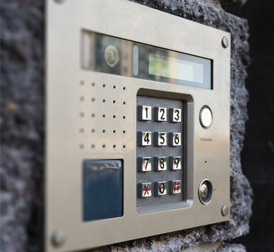
In addition to physical credential methods like key fobs, ID cards and keypad entry, businesses can opt for biometrics such as fingerprint or iris scanning. These systems offer higher levels of security and are frequently employed in areas that need extra tight protection such as data centers or federal buildings.

3. Easy Access

Keyless entry systems offer a secure and convenient way to enter your building or office space, replacing traditional metal keys which can easily get lost or stolen and necessitate rekeying.

Instead, electronic access devices like key cards and fobs are combined with RFID readers that verify each user’s credentials to unlock doors. This type of door security is also ADA-compliant, enabling tenants to grant visitors remote access using their smartphones.

These systems provide easy access for tenants, eliminating the need to hide spare keys under carpeting or have a sitter leave a metal key at the front desk. Furthermore, staff can quickly set up new users and adjust permissions with a mobile-based system that works from anywhere.

4. Easier Maintenance

Keyless entry systems offer a simple solution for eliminating the stress of managing keys. They can be programmed to send codes directly to phones or written documents, so people don’t have to worry about forgetting a code or creating one for guests.

Keyless entry systems make it simpler to maintain your building’s locks and security. For instance, if you are turning in your unit to a new tenant and want to save money on replacing the lock, a keyless entry system can quickly be reset.

5. Save Money

Keyless entry systems are an ideal solution for business owners and managers who want to save time on various tasks. Not needing key fobs or ID cards, keyless systems enable business owners to track employee access and attendance with back-end software.

One of the key advantages of keyless entry systems is that they save businesses money on maintenance expenses. Businesses using keys often need to purchase replacement locks or accessories at high costs.

With a digital keyless system integrated with software, business owners can quickly assign codes or mobile apps for new users and control access rights accordingly. Furthermore, reports on visitor turnout and attempted illegal entry can be retrieved for insight and reporting purposes.

5 Common Items to Store in a Home Safe & Why

5 Common Items to Store in a Home Safe & Why

You finally invested in a home safe, but you’re not sure what you should put in it and what doesn’t really need to go inside your safe. There are plenty of things you may believe are valuable enough to go into your home safe, but you also only have so much room. Let’s look at some of the common items to store in a home safe and why you should put them in your safe.

Is your Safe Fire Proof?

Before we look at the list of items, it’s important to consider the safe you have. A home safe should provide fireproof qualities. The most common reason you will need a safe to protect your belongings is likely a house fire. Yes, a break-in is possible, but many home safes are small enough a criminal could easily take off with them.

Even with a larger home safe that’s too heavy to move, it’s important to make sure it’s fireproof. With a fireproof safe, you gain many more benefits for protecting your most valuable things.

Five Common Items to Store in Your Home Safe

1. Important Documents

Birth certificates, social security cards, titles to property, insurance policies, home pictures, wills, and other important documents can all be store in a fireproof home safe. This will help to protect them in the event of a fire or another disaster. Anything you might need to rebuild your life, if something were to happen, should go in the safe.

Storing important documents in a safe also ensures you don’t have to worry about where they are. They will be in your home safe when you need them.

2. Important Keys

Yes, you probably have plenty of keys on your daily key ring that don’t belong there. Your keyring should have vehicle keys, house keys, and safe keys (if necessary). However, the rest of your keys, such as safe deposit box keys, keys to personal storage unit locks, and other keys you don’t use every day, should go in your home safe.

It’s also smart to keep a spare car key in the safe, just in case.

3. Valuable Jewelry

If you have a $100 bracelet, it probably doesn’t need to go in your home safe. However, if grandma passed down an heirloom worth $1,000 or more and you don’t wear it daily, this type of valuable jewelry can go into your safe. Any valuable jewelry can be stored in your safe.

4. Emergency Cash

Of course, it’s a good idea to have some emergency cash, gold, and silver in your home safe. Any physical currency you own that you don’t need to spend can go in the safe. Many people hold their emergency fund in cash or at least a portion of it, which should be stored in your safe.

5. Guns

While some home safes have room for guns, others will need to go in a gun safe. If you have room in your fireproof home safe, it’s a good place to store a gun.

There are many common items you can and should store in your home safe. It depends on what you consider to be valuable and what you want to protect the most. Make sure you consider all your items and protect the most important things in your home safe.

Losing Your Keys: Top Tips to Always Remember Your Keys

Losing Your Keys: Top Tips to Always Remember Your Keys

Forgetting your keys can lead to needing a locksmith. When you lose your keys regularly, you might need some helpful tips to ensure you can remember your keys. Here are a few helpful tips.

1. Get a Larger Keychain

If you have a smaller keychain, it might get lost in your purse. However, with a larger keychain, it will be easier to spot. This way, if you do lose your keys, they are easier to find and you’ll be less likely to forget them.

2. Keep Your Keys on a Hook

You can get a hook for your keys and put it near the door you leave out of the most. This can help ensure you remember to grab your keys before you leave and you don’t forget them. It will also give you a regular spot for your keys making it harder to lose them. Discover 6 simple tips to help you remember your keys and avoid getting locked out.

3. Attach Your ID to your Keys

If you use a lanyard with your ID and you attach your keys it will help you remember your keys easier. This trick allows you to create a bulkier keychain and also gives you an additional reason to remember your keys with your ID attached.

4. Tile Your Keys

It sounds odd, and no, it doesn’t mean attaching a piece of tile used for flooring to your keys. Tile is a small disc you can add to a bag, clothing, shoes, or another item, like a keychain. It’s a wireless object you can use to find your keys when they are lost. Another version of this is called a Stick N Find.

5. Carry Your Keys on a Carabiner

If you have a habit of losing your keys when you’re out, use a carabiner instead of tossing them in your pocket. It can be attached to your belt loop to ensure you don’t lose your keys.

Carabiners can also be used inside your purse or as an attachment to the strap. Use it to make finding your keys much easier when they are lost in your purse.

6. Eliminate the Key Clutter

If you have keys you don’t use or don’t need, you can take them off your keychain. While this may not help you remember them, it can help you find the right key when you need it.

These six tips can help you when you need to remember your keys. You can use many other tricks, too. Of course, if you lose your keys often, you should also give a duplicate key to a friend or family member just in case.

You can also have a locksmith create a master key for many different things to make things easier. Then, get a few copies of this master key and give them to those you trust the most. This will ensure, if you get locked out of your home, you can make a phone call and get a spare key to help you out.

Maintenance Tips for Commercial & Residential Safes

Maintenance Tips for Commercial & Residential Safes

For businesses, safes are usually the last thing on your mind when it comes to your to-do list. You typically prioritize business activities before anything else since your business depends on it, right? The same goes for residents who may have safes in their homes as well. There are a million other tasks that can be accomplished before dealing with your safe.

Be Gentle

Sounds simple enough right? Even if you have a heavy-duty safe, constant slamming of the safe door can cause internal parts and bolts to malfunction and eventually break. Safes with a traditional locking mechanism are more susceptible to breaking because internal parts wear and tear easier.

This is why investing in modern safes such as a biometric, keypad, and safes that require electronic access cards is better for your pockets and more durable.

Ensure Locking Mechanisms are Lubricated

Constantly opening and closing your safe will naturally cause wear and tear over time. No one wants to deal with a safe that doesn’t open, even when the right combination is input. This can be troublesome especially when you have something of value that you need to get out when you’re in a time crunch.

Better yet, it can really be troublesome when you have a gun safe and need to extract something for protection. To avoid this, keep all moving parts lubricated. At a minimum, locks should have maintenance done annually.

Invest in Maintenance & Repair

Last but definitely not least, make an investment in your safe! Safes hold valuable items and the last thing you want to do is jeopardize the availability of those items. For this reason, you should invest in safe maintenance and repair.

Hire Safe Repair Professionals for the Job

Quick Key Locksmith is available 24/7 to help with all your residential and commercial locksmith services. Need safe maintenance? Safe Repair Services? We’re here to get the job done! Contact us at (877) 787-3399

How Can Many Locks Be Opened with a Single Master Key?

How Can Many Locks Be Opened with a Single Master Key?

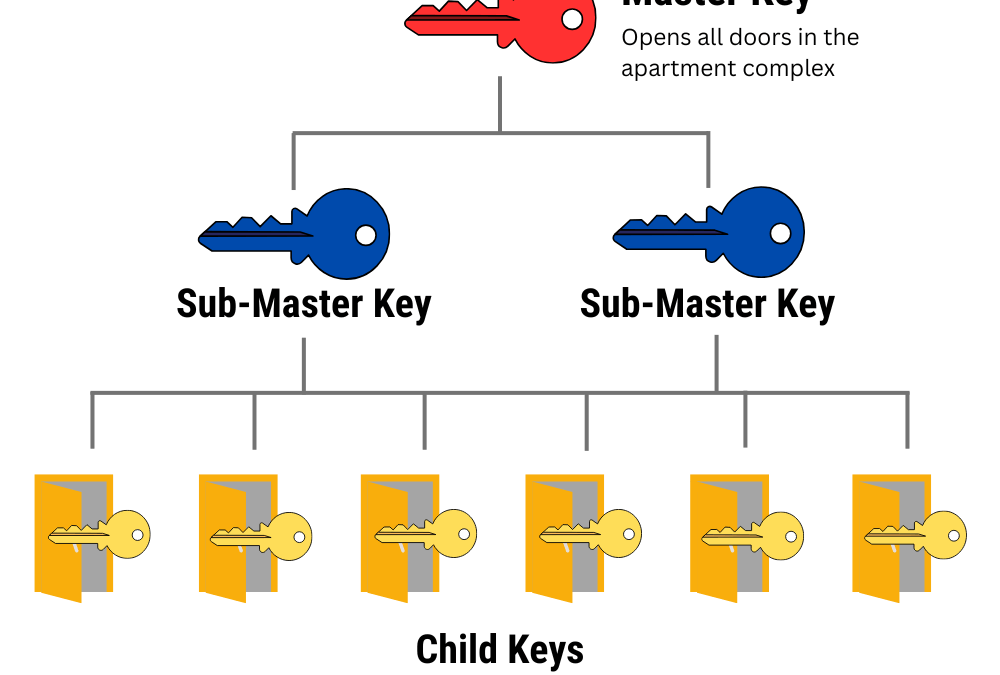
Have you ever wondered why it is that a single master key can open any of the locks in your entire apartment complex, while the one you have will only open your apartment door, and possibly the main entrance door to the building? While this specific scenario highlights a master key setup in an apartment complex, the same situation could be true with any number of other commercial and residential lock-and-key configurations.

The answer to the ‘one key, many locks’ question lies in a very clever arrangement of the components which comprise a lock and key system – but the same principle which allows that kind of master key access is also what makes this model vulnerable to a security breach if engineered by a skillful and knowledgeable criminal. Here’s why all that is true.

How Master Locks Work

Most locks are constructed using design concepts that are fairly uniform in the industry, the most common of which is the cylinder lock. With this kind of design, the key turns a cylinder which is attached to a cam, which then also gets turned. When the cylinder is turned in one direction, the cam or plug, causes the door to open by pulling in on the bolt. When the cylinder is turned in the opposite direction, the bolt is released by the cam and is snapped into place to prevent the door from opening.

Another common type of lock is the pin and tumbler design, which features a series of small pins, each having different lengths. These pins are separated into pairs, with each pair situated in a shaft that goes through the central cylinder cam, and on into the housing. The pairs of pins are kept in position by springs situated at the top of the shafts.

Before key insertion, the bottom end of each pair rests totally inside the plug, and the topside pin stays halfway inside the plug and halfway within the housing. The position of the upper pin is what prevents the plug from being turned because the plug is bound to the housing by the pins.

The fundamental principle which makes any master key system functional is that there are extra pins in the cylinder of the lock, and these allow for several differently shaped keys to achieving a compatible alignment with all sets of pins that they extend into.

Do You Need a Master Key System?

If you need a master key system to be installed at your home or place of business, the first call you should make is to a highly reputable commercial locksmith or residential locksmith in your area.

As mentioned earlier, some master key systems are more easily breached than others, because clever criminals can reverse engineer the system of pins in the cylinder to create their own master key. An expert locksmith can discourage this kind of criminal breach of security with a professionally designed master key system.

Setting Up Vandal-Proof Cameras

Setting Up Vandal-Proof Cameras

The importance of setting up vandal-proof cameras can hardly be overstated since any would-be burglar will be on the lookout for security cameras as a tip-off to a home that has at least some level of protection. While easily deterred burglars might run at the first sign of a security camera, the more determined types might decide to disable the camera itself as a preliminary to vandalizing the home and plundering any valuables inside.

Any CCTV system or simple security camera which isn’t made vandal-proof should be considered vulnerable to attack and has the potential to be rendered useless. Your local residential locksmith can implement some precautionary measures with your access control system so that it can be made virtually invulnerable to attack from even skilled and persistent intruders. If you happen to be the do-it-yourself type, you may want to try a few of these ideas yourself, otherwise – don’t hesitate to leave it to the experts.

Vandal-proofing your security setup

The primary focus of vandal-proofing needs to be the camera itself. If it’s hidden from view, that can go a long way toward avoiding attention from a burglar, although it must be kept in a good line of sight from your entrance. Next, the camera itself should have tamper-proof construction, which means all screws should be recessed, so as to be unreachable with any standard screwdriver or hex wrench – only you would have the appropriate tool to reach those screws.

The camera should also be made impervious to powerful impacts, such as from a hammer or a rock. When you check out security cameras in a store, or at your local commercial locksmith, be sure to check out the impact rating it has. There’s a whole international standard that has been established, and camera manufacturers build their products to specifications that correspond to the various impact levels identified in the international standard.

Finally, one of the most obvious ways to disable a security camera system would be to cut any cables running from the camera to the home’s interior, presumably to the control panel, where information is transmitted. The solution to this glaring vulnerability is to conceal all cabling from view, so it doesn’t attract the attention of your burglar. A surface-mounted dome camera would have its cable exiting the back of the unit, directly into the home’s interior, so it literally could not be clipped with wire cutters.

A secondary method of protecting the cable is by housing it in a mounting bracket which might look something like a square pipe, and which carries the cable inside it, safe from harm by the criminal-minded, and then enters the building within a few feet of the camera itself. A camera cable conduit has a similar strategy, in that it has the cable inside it, protecting it from damage. This looks more like a long, round pipe, and it is used in situations where there is no convenient entry into the building, anywhere close to where the camera itself is located.

Call Now Button