


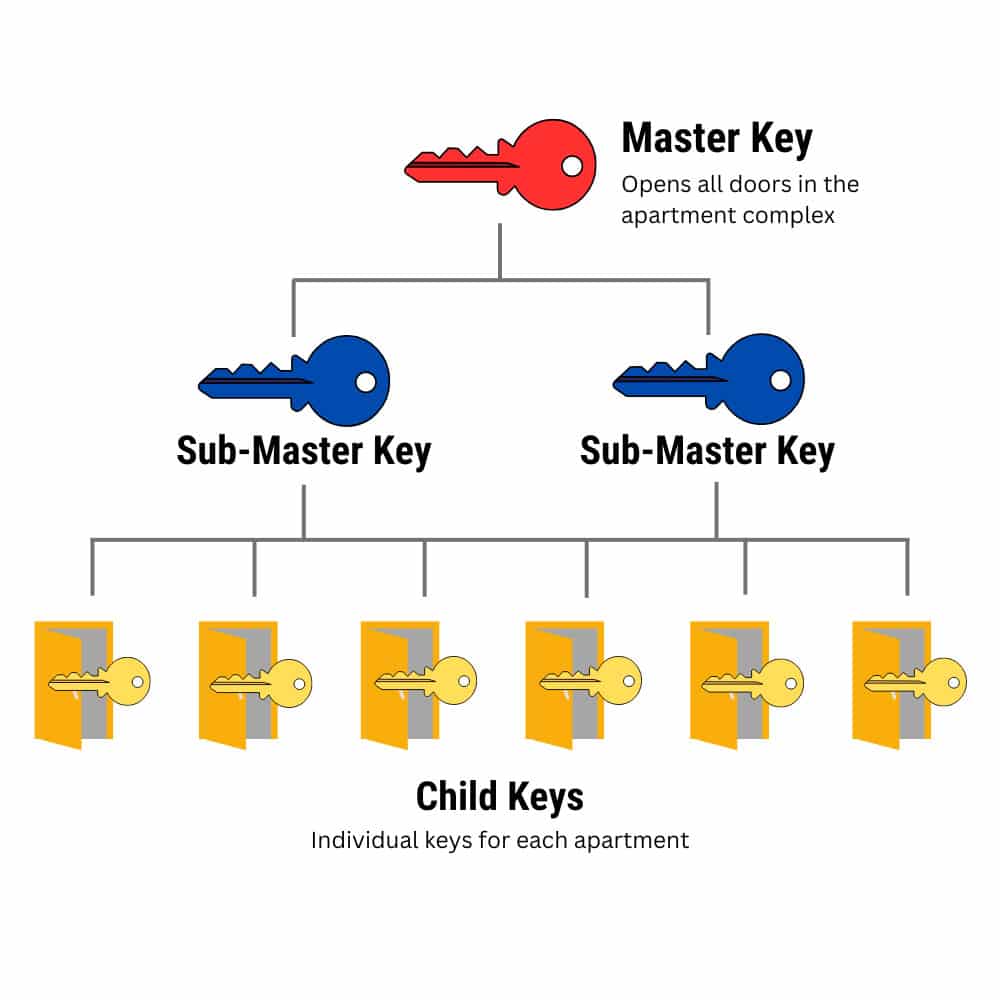
Implementing a master key system can enhance the security of businesses across Chicago, IL. Without proper management, however, these systems can become more of a liability than an advantage. Understanding the common pitfalls associated with master key systems is important for maintaining secure operations.
Missteps in managing master key systems often lead to breaches or lockouts, disrupting operations and incurring costs. Quick Key Locksmith & Security offers installation, repair, and maintenance services for master key systems, ensuring smooth business operations.
Overly Complex Master Key Systems
One issue businesses face is creating overly complex master key systems. When there are too many levels of key hierarchies, confusion and misuse are common. Design a straightforward hierarchy that aligns with your security needs. A complex system introduces risks of accidental key loss or sharing.
Simplify access levels to reduce confusion and potential cross-keying errors. Setup missteps can require re-keying or replacements, which can be costly and time-consuming.
Poor Record-Keeping Practices
Businesses often underestimate the importance of maintaining accurate records of key distributions. Without these records, verifying access permissions is difficult. Implement consistent record-keeping practices to track and audit key use, reducing unauthorized access.
Gaps in record-keeping can lead to unwarranted access, needing re-evaluation of the master key system. Accurate records help minimize these risks.
Ignoring Regular System Audits
System audits are crucial for maintaining a master key system’s effectiveness. Overlooking regular audits can lead to undetected vulnerabilities. Regular checks ensure all components are functional and match your security policies.
Neglecting audits can result in security risks and disruption of business operations. Addressing issues early prevents the need for urgent repairs or replacements.
Inefficient Key Control Policies
Key control policies should balance security needs with usability. Inefficient policies can lead to delays and confusion, affecting employee efficiency and security. Ensure your policy effectively manages key issuance and returns.
Poorly designed policies often require restructuring and potential retraining. Proper control prevents unauthorized reproduction and bottlenecks in access.
Underestimating the Role of User Training
Comprehensive user training ensures proper use and management of the master key system. Training helps employees understand key handling responsibilities. Identify training gaps to improve operational protocols.
Lack of training can lead to key loss or damage. Addressing this usually involves additional training programs.
Lack of Security Upgrades
Master key systems must evolve with business security needs. Timely upgrades are necessary to maintain integrity. Failing to upgrade can attract threats and vulnerabilities.
Regular upgrades prevent the system from becoming obsolete, helping maintain effectiveness against threats.
Improper Key Issuance Procedures
Improper key issuance undermines a master key system. Ensure clear policies for distribution and accountability. Efficient procedures help manage access securely.
Improper handling of distribution can lead to unauthorized access. Proper procedures also aid in recapturing lost keys, reducing risk exposure.
Check latch alignment before you assume the lock failed.
Neglecting Professional Assistance
Managing a master key system in-house can overlook key security elements. Professional assistance checks operational soundness and aligns components for effective security use.
Contact Quick Key Locksmith & Security for professional installation and repair of master key systems in Chicago, IL. Our services include rekeying and replacement, ensuring secure business operations. Call us for expert assistance.